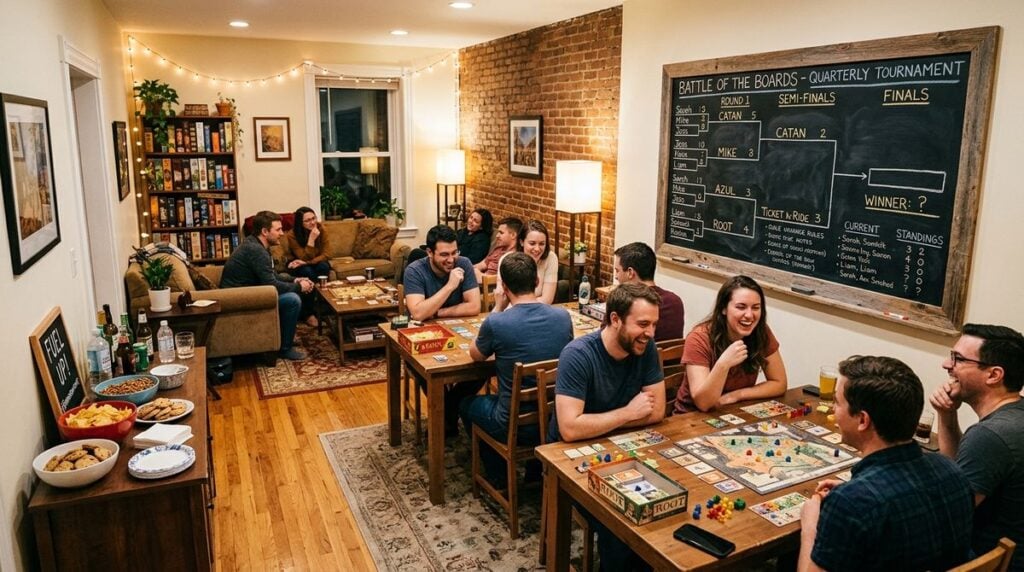
Garden centers depend on teamwork, yet busy seasons can leave staff rushing between customers, deliveries and displays with little time to talk. Friendly competition offers a relaxed way to build trust and improve communication across the floor. A regular board game night can turn a group of coworkers into a team that enjoys solving problems together when the pressure rises.
Local game clubs, library game nights and workplace social groups often welcome adults who want a low-pressure evening. Players learn to listen, share strategies and celebrate one another’s wins without turning the table into a battlefield. This article describes how a garden business owner can start a game night, choose suitable games and carry the habits learned at the table back to the sales floor.
Choosing Games That Build Shared Skills
Begin by picking games that reward cooperation rather than rivalry alone. Cooperative titles ask everyone to plan together and adjust when the situation changes, which mirrors the problem solving that happens during a busy weekend. Readers may also want to visit Morskoiboy.com. Short games that finish within an hour are easier to schedule around shifts.
Ask staff which games they already enjoy, and invite them to suggest one or two titles for the next session. Local libraries often lend tabletop games, and some adult education centers host game evenings that you can observe before you commit. Testing a game with a small group first helps you avoid a title that feels too slow or too complex for a mixed team.
Using Game Night to Improve Communication
Games create natural moments to practice clear speech and active listening. Players must explain their moves, ask for help and admit when they are unsure about a rule. Many teams find that a quick debrief after each game helps everyone notice what worked. You can also visit worldaroundu.com for more reading.
Ask a few simple questions afterward, such as what made the plan succeed and where the group could have spoken up sooner. Write the answers on a whiteboard in the break room so the lessons stay visible. The habit of naming a problem early is one of the most valuable things a team can practice at the table.
Structuring Game Nights Without Disrupting Work
A successful game night needs a clear schedule and a fair way to rotate the teams. Set a start time after closing, keep snacks light and choose a space that is comfortable for everyone involved. For a related read on this site, see Business Trip Etiquette Where Meeting Customs Shift From. Some managers offer a session during a slow weekday, which lets part-time staff join without changing their shifts.
Write a simple rota that lists the game, the players and the lead for each session. Rotate the lead role so each person has a chance to teach and guide. The structure reduces confusion and makes it easier for new employees to join without feeling left out of the conversation or the fun.
Measuring the Real Benefits
Team games are not a magic fix, but they can show where the group works well and where it struggles. Watch for patterns in how people share responsibility, handle mistakes and encourage quieter colleagues. Use those observations as a starting point for conversations at work, not as a scorecard that ranks anyone. Gentle, honest feedback helps staff feel valued and heard.
Track practical outcomes as well, such as how quickly orders are restocked or how smoothly shifts change hands. Compare these results over several months rather than expecting an instant shift in the store. Share what you learn with the team and invite suggestions for the next game.
Some managers invite a supplier representative or a regular customer to join a game night occasionally. Outside guests bring fresh perspectives and often enjoy the relaxed setting as much as staff do. Keep these visits infrequent so the evening still feels like a team gathering. Introduce each guest clearly so everyone feels comfortable from the first round.
Notice how the group celebrates wins and recovers from losses. A team that laughs at its own mistakes usually handles real setbacks with more calm. Encourage players to thank one another for good moves and to name one lesson after each round. Finally, keep a short record of the games played and the ideas discussed, because looking back over several months shows how communication has changed. Share one praise each week in a quick team huddle, since that keeps the mood positive.
Playing Together Through the Season
A regular game night gives garden center teams a reason to spend time together outside the rush of the work week. Keep the evenings light, rotate the leads and link the lessons back to daily tasks. Teams that laugh and plan together often handle pressure more calmly on the floor. The board may be the place to begin, but the teamwork grows through every shift that follows.