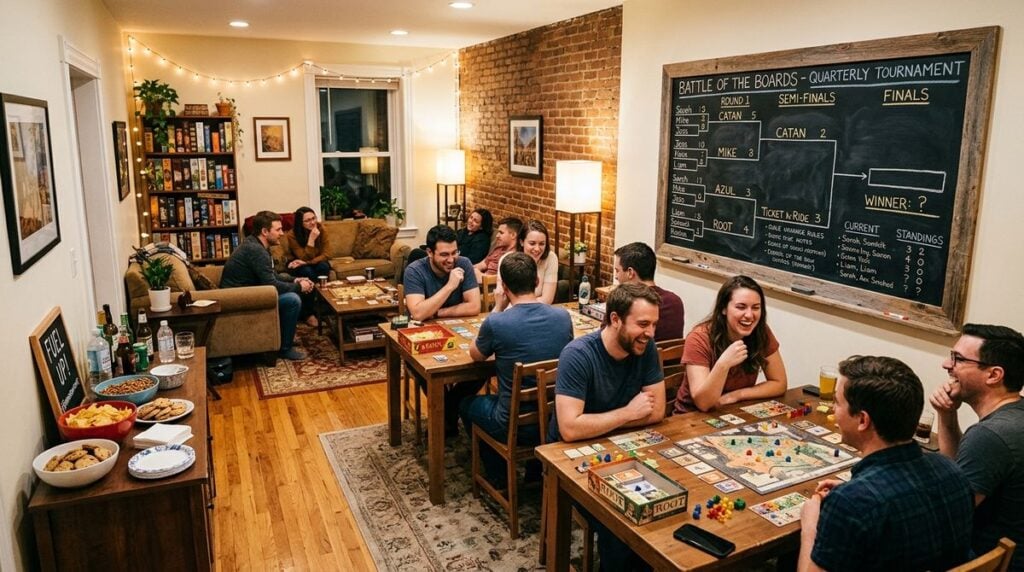
A game night can be a lively social event, but noise, dim rooms and fast moving screens can shut out guests who are hard of hearing, have low vision or simply prefer a calm space. A business that runs paid game nights can widen its audience by planning for these needs from the start. Accessibility in this setting does not mean lowering the standard of play. It means thinking about sound, light, text and seating so that every guest can join in fully. This article describes general planning steps for a service that welcomes all adult players.
Planning a Calm Room
Start with the room itself. Choose a space that can be partly separated from the main activity, so guests can take a break from crowd noise. Soft furnishings, rugs and curtains help reduce echo, which makes speech easier to follow. Keep the music low or absent during rules explanations, and set a clear time for quiet moments. A calm zone with a small table, a few chairs and a warm light gives guests a place to regroup without leaving the event. Readers may also want to visit farmhousefoodsco.com.
Captions on Screens
Any screen used during a game should show captions for spoken prompts, timers and announcements. Place the captions where they can be read from every seat, in a large, plain font with strong contrast. Test the captions before each event by sitting at the furthest table and checking whether every word is clear. Some games also use sound cues, such as a bell or a buzzer, so provide a matching visual signal, like a flashing light or a printed card. You can also visit The Candid RD for more reading.
Large Print Rule Cards
Rule cards should be printed in large type on matte card. Keep each card short, with one rule per line and plenty of space around each heading. Use simple icons only when a written label sits beside them, and avoid any text that relies on color to make sense. Place a copy of the rules at each table, and offer a spare copy at the entrance for guests who prefer to read before the game begins. A short demonstration at the start of the night helps everyone learn the flow of play at the same pace. For a related read on this site, see Captions and Transcripts for Staff Training Videos.
Seating and Lighting
Seating decisions shape how comfortably guests can take part. Offer a choice of seats near the host, near a window and away from the loudest table, so each guest can pick the position that suits them best. Keep the tables well lit, with lamps placed so that they do not glare into anyone’s eyes. Leave enough space between chairs for wheelchairs and walking frames, and check that the route to the toilet and the exit is clear. Guests should be able to move around the room without needing help.
Pricing Packages Clearly
Paid game nights should show their prices in plain words. List the entry fee, any extras and the cancellation terms in a short, large print summary, and send the same details by email so guests can read them at home. Avoid bundling several charges into one vague figure, since clear breakdowns build trust. If the event offers a reduced rate for a particular group, explain the eligibility in simple terms. Confirm each booking in writing, with the date, time and room details, so every guest knows what to expect.
Plan the schedule so that breaks come naturally. A short pause between rounds lets guests stretch, speak with friends and refresh their concentration. Offer a simple snack and water station away from the main play area, so guests can take a break without interrupting others. Keep the timings clear, and announce each break with a captioned message on the screen. Give every guest a clear way to ask for help during the evening, such as a raised hand or a written message card. Staff should practice describing the room layout before the doors open. Honest feedback after each event helps the team improve steadily.
Hosting With Care
Quiet, captioned game nights welcome a wider range of adult players and keep the fun at the center of the evening. Calm rooms, readable captions, large print rules, thoughtful seating and clear pricing all help guests feel at ease. Test the room and screens before each event, ask one guest to read the rules aloud and gather feedback at the end of the night. Small changes repeated over many evenings build a reputation for care and good hosting.